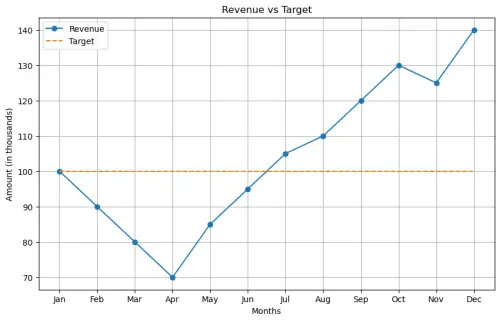
Throughout my career, I have never encountered a company that reaches their sales targets each and every month year after year. Even if they hit their goals at the end of the year, they have been struggling to stay on track at some point throughout the year. The majority of reasons for getting behind can be related to Sales Team Underperformance. The positive message here is that all organizations face moments worrying about not hitting their target at the end of the quarter or year, but many of them are flexible and innovative enough to turn this situation around. And if they can do it, so can you.
How easy it is for you to adjust depends on your team (structure), the processes in place and several other internal end external factors. The following 5 steps, will help you to get started. If you believe a bigger change is needed, or if you don’t know where the weakest links are causing your team to fall behind, reach out to get help in finding out. Schedule an exploratory meeting to find out if JR Sales Solutions can help.
1 Assess the Situation
The first step to getting your team back on track is to understand why they are underperforming. Is it a lack of skills, resources, or clarity? Is it a communication breakdown, a conflict, or a morale issue? Is it a mismatch between expectations and reality, or a change in priorities or scope? To find out, you need to gather data and feedback from your team members, clients, stakeholders, and other managers. You can use various methods, such as surveys, interviews, meetings, reports, or dashboards, to collect and analyze the information. The goal is to identify the root causes of the problem, the gaps in performance, and the areas for improvement.
If you feel confident enough decide which methods to use and to execute them yourself, go for it. If you feel more comfortable handing over these decisions and time-consuming tasks, make use of a business consultant specialized in the commercial area’s like JR Sales Solutions. Finding the route cause and drafting a plan to tackle can be challenging in most cases.
2 Communicate the Problem
The next step is to communicate the problem to your team in a clear, honest, and constructive way. You need to explain what the performance targets are, how they are measured, and why they are important. You also need to share the results of your assessment, and how the team is falling short of the expectations. You should avoid blaming, criticizing, or demoralizing your team, and instead focus on the facts, the impact, and the solutions. You should also invite your team to share their perspectives, concerns, and suggestions, and listen to them with empathy and respect. The goal is to create a shared understanding of the problem, and a sense of urgency and accountability to solve it.
3 Set Smart Goals
The third step is to set SMART goals for your team to achieve the performance targets. SMART stands for Specific, Measurable, Achievable, Relevant, and Time-bound. This means that your goals should be clear, quantifiable, realistic, aligned with the business objectives, and have a deadline. You should also break down your goals into smaller milestones, and assign roles and responsibilities to each team member. You should involve your team in the goal-setting process, and make sure they understand and agree with the goals. You should also document and communicate the goals to your team, clients, stakeholders, and other managers. The goal is to create a clear roadmap for your team to follow, and a way to track and evaluate their progress.
4 Provide Support and Feedback
The fourth step is to provide support and feedback to your team as they work towards the goals. You need to ensure that your team has the necessary skills, resources, and tools to perform their tasks effectively. You can offer training, coaching, mentoring, or external assistance to help them develop their competencies and confidence. You also need to monitor and review their performance regularly, and give them timely, specific, and actionable feedback. You should praise and recognize their achievements, and address and correct their mistakes. You should also encourage and facilitate communication and collaboration among your team members, and between your team and other parties. Let them share best practices. The goal is to help your team learn, grow, and improve their performance.
5 Evaluate and Celebrate Results
The last step is to evaluate and celebrate the results of your team’s efforts. You need to measure and compare their performance against the goals, and identify the outcomes and impacts. You should also solicit and provide feedback on the process, and identify the strengths, weaknesses, opportunities, and threats. You should acknowledge and appreciate your team’s hard work, and reward and celebrate their successes. You should also learn from their failures, and identify and implement the lessons and best practices. The goal is to reinforce and sustain your team’s performance, and to foster a culture of continuous improvement.